✅ Approve requests
Who can do this: Plan Moderators.
You are a moderator on a plan, and someone wants access. This guide covers the moment that makes Moderation real: reviewing and answering an access request, on your phone, in under a minute.
You get notified
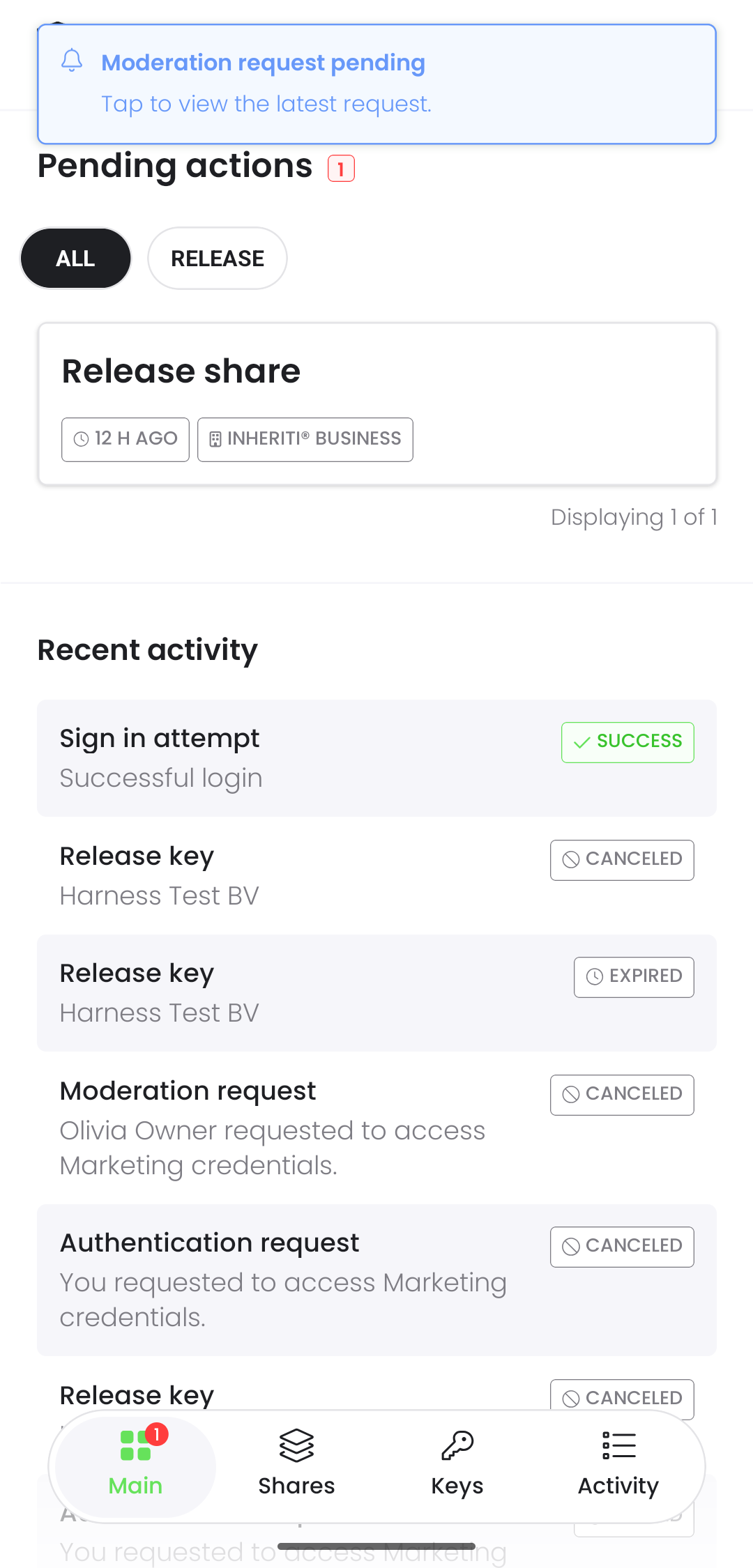
The request lands in SafeKey Mobile with a push notification: "Moderation request pending: tap to view the latest request." It also appears under Pending actions on the Main screen, where the Authorisations filter shows all requests that need your decision.
Review the request
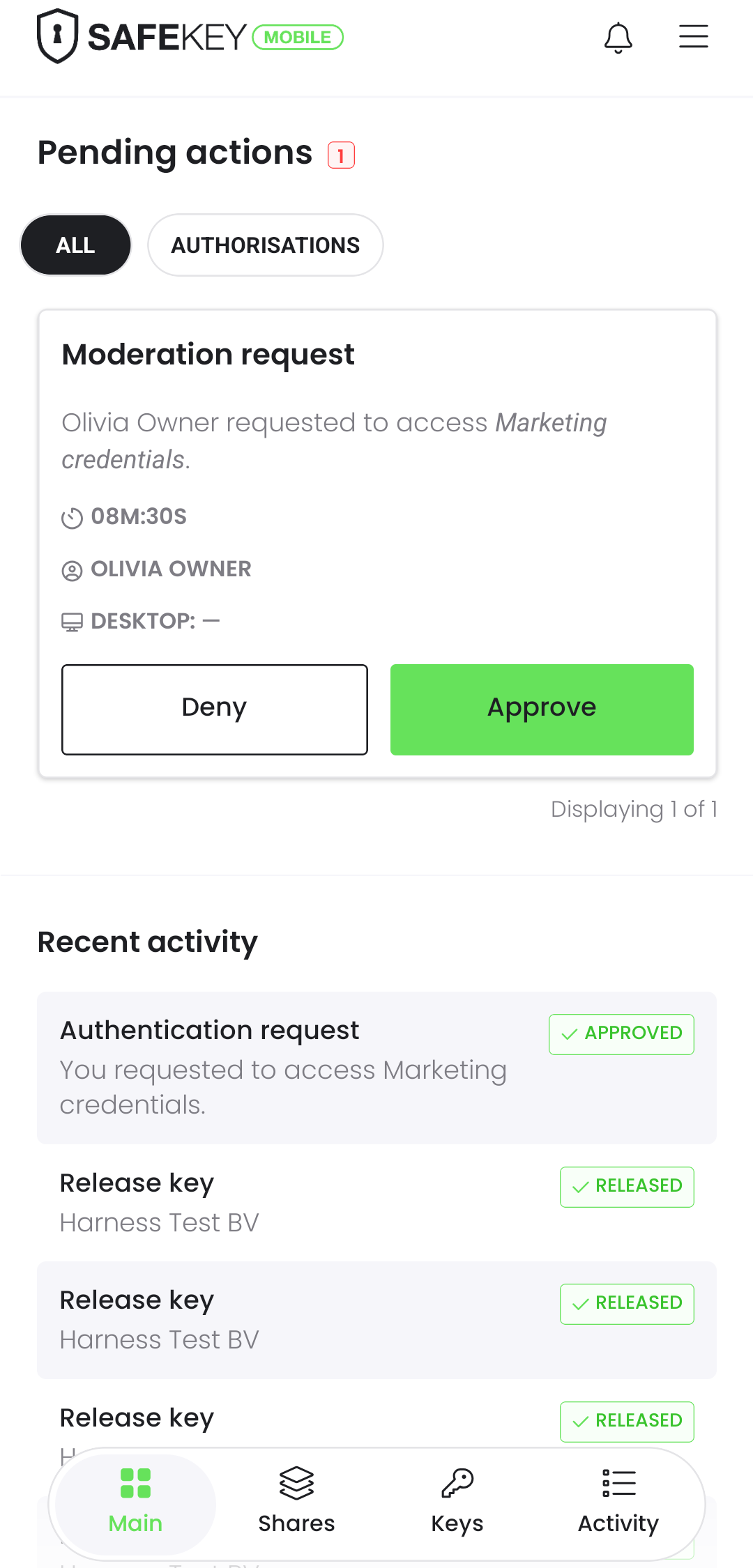
Open the Moderation request. Everything you need to decide is on one card:
- Which plan is being requested: "Olivia Owner requested to access Marketing credentials."
- Who is asking, by name
- From where: the kind of device behind the request, for example Desktop
- The response timer: a countdown shows how long the request stays open, because a request does not wait forever
A convincing email or phone call is not an approval. The only thing that counts is what you decide here, on a device you hold.
Approve, or deny
- Approve if the request makes sense: right person, right plan, right moment. Once the plan's approval threshold is reached, the reveal can proceed.
- Deny if anything feels off. Denying costs nothing; the requester can always ask again with context.
Selecting Approve or Deny asks for your PIN. The first time, the app also asks how often authentication is required for secure actions (Authorisations: Always by default, covering Authenticate, Dead Man Switch and Moderate); choose and select Save.
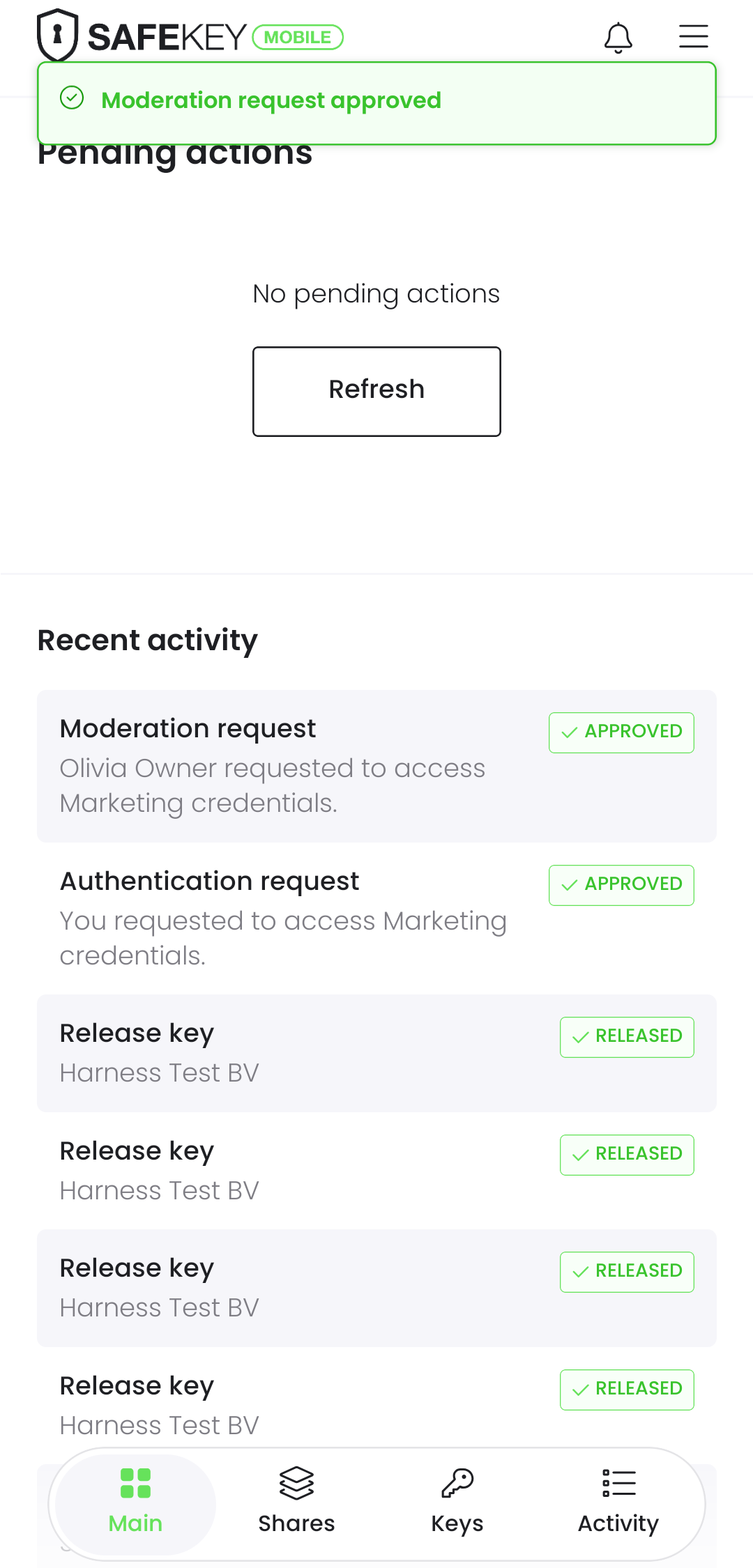
The result is confirmed instantly ("Moderation request approved") and shows up under Recent activity as Approved.
Every decision is recorded
Your approval or denial lands in the organisation's audit trail: who asked, who decided, and when. For you that means never having to reconstruct a decision from memory; for your organisation it means being able to show access was controlled, not just believe it.
Next: access a protection plan, the requester's side of this same story.